

Christian J. Roldán Aponte
Artist and Educator
Roldán-Aponte is a Chicago-based visual artist whose work specializes in the use of art as a tool for the preservation of collective cultural memory, for social expression, and for community empowerment.
Inspired by Paulo Freire’s educational approach, Roldan’s public work focuses on the role of dialogue-driven mural projects as a means to create alternative, accessible learning spaces that capture collective history, values, and struggles through visual narratives related to our communities' reality. This theoretical framework has been put into practice through his career as a community-based artist and activist. Its outcomes are visible through the Humboldt Park community neighborhood where normally accessible walls have become the community's 'organic billboards that articulates the reality of the neighborhood, through colorful paint and images that captures the essence of place beyond the infrastructure. Through this approach, Public artwork publishes those narratives that are relevant to the local people, but often are invisibilized in everyday life rumination.
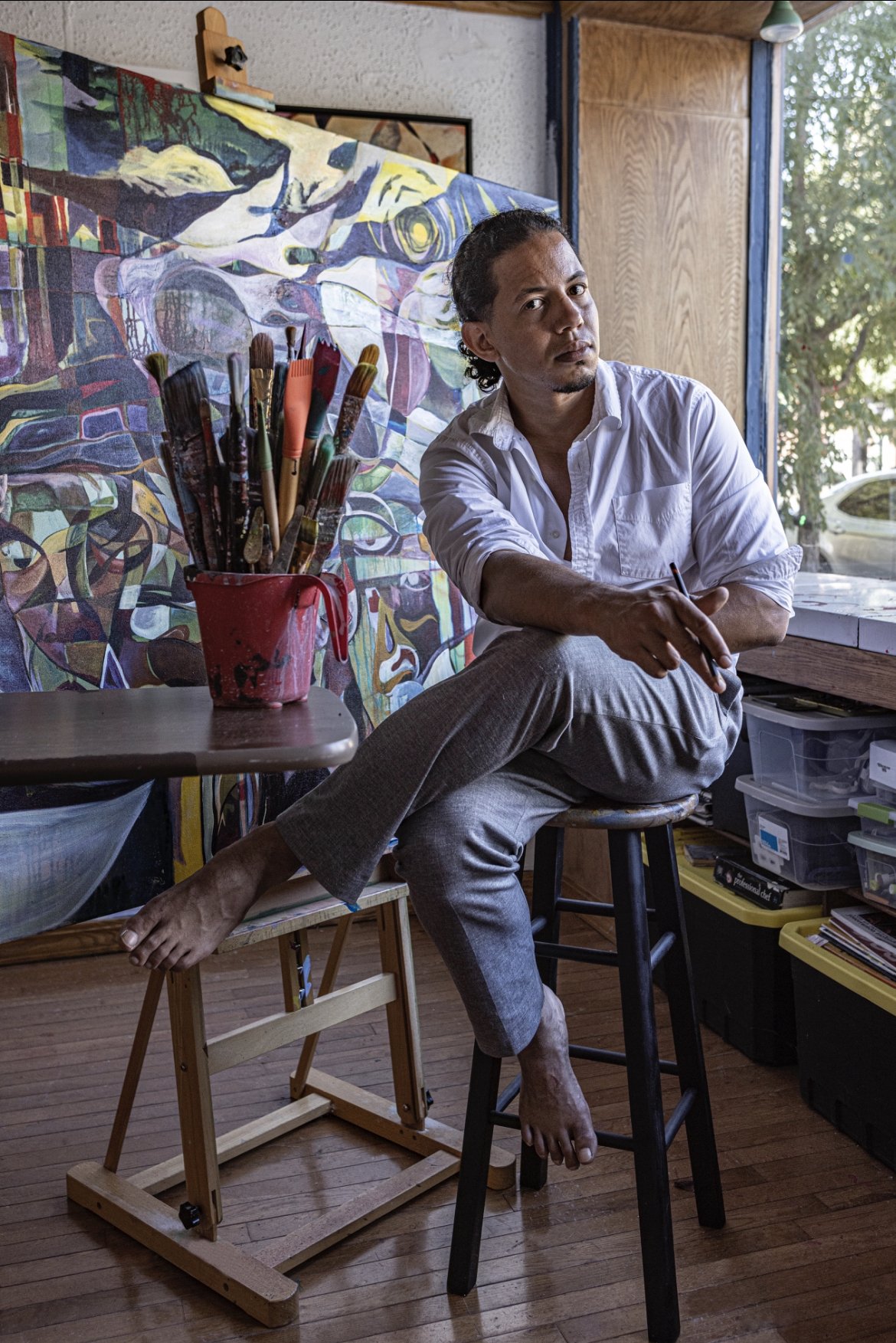

This approach transforms public spaces into learning environments where diverse stories come to life through imagery—turning walls into powerful counter-narratives that challenge bias depictions of marginalized communities. Through meticulously arranged compositions, the visual pieces do more than decorate; they ignite conversations that extend beyond words, deeply reaffirming community values.
By creates spaces for communities to reshape their own narratives, they are facilitated to see themselves in a collective visual language. This process is rooted in collaboration, where the community’s voices lead the way before the art takes form. This approach is fluid, and while murals are a primary medium, Roldán embraces diverse forms of expression.
For Roldán, art is a catalyst for change, not an end in itself. It’s a powerful vehicle for raising awareness and challenging entrenched narratives, especially for those overlooked by mainstream discourse. Public art, in this context, becomes a platform for reclaiming identity, questioning inherited histories, and asserting one’s place in the broader human story. His mission is to reshape how we understand culture, history, and community by reimagining the visual landscape, giving voice to those who have been silenced.
“The genesis of my creative process is ‘discomfort’. Inspiration emerges by questioning the status quo, and imagining an alternative reality. My work speaks to the desire to understand, codify, and reconstruct social narratives, to reveal society as a social construct constantly changing, and to preserve the collective memory in the diaspora. Once the narrative and idea emerges, with each trace, the creation becomes a problem in constant evolution with each trace, brushstrokes, and layers over layers of paint. The image starts mutating with the ideas. First is a blank surface, later is a doodle. Then, after a while, the piece begins getting shape, little by little. It’s then when I leave everything and rework it the next day.
